Mike
Awakening the Angel System: Apocalypse: A LitRPG Progression FantasyMike, also remembered as Uncle Mike, is Jack’s deceased uncle and one of the ordinary family figures whose loss helps define Jack’s later trauma. He is not presented through an extended independent storyline; instead, he survives in Jack’s recollections, in the nightmare that turns his dead into accusers, and in Jack’s repeated accounting of those he could not protect. His narrative importance lies in the contrast between the intimate care associated with him and the mass violence that eventually overwhelms Jack’s life.
Identity and Place in Jack’s Past
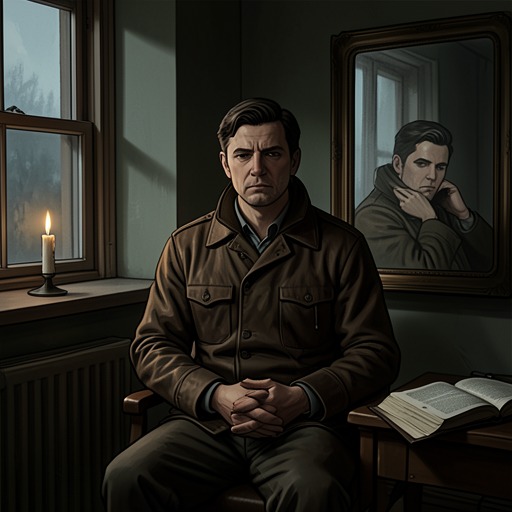
Mike belongs to the domestic world Jack remembers from his old apartment. Returning there after five years, Jack recalls late nights in which his uncle offered him whiskey and crackers. The memory is specific and unheroic: Mike’s importance is conveyed not through rank, supernatural power, or public recognition, but through food, drink, and the small ritual of staying with Jack during difficult years. That modest scene gives Mike the character of a caretaker whose presence helped make an unstable home bearable.
The same recollection places Mike beside Jack’s relationship with Jill and the financial pressures of the household. Jack remembers bedtime stories with Jill, who interrupted them to talk about her favorite Mecha-man television show, while money and Jill’s medical bills formed the hard practical background of family life. Mike therefore represents more than an isolated relative. He is part of the fragile network through which Jack experienced kinship, responsibility, and survival before war and political catastrophe recast those values in military terms.
Memory, Loss, and the Return of the Dead
Mike’s death is not narrated as a single completed episode in the available evidence. Instead, his absence returns through Jack’s memory and through the emotional logic of later scenes. When Jack looks back at the apartment, the remembered whiskey and crackers become evidence of a life that has vanished; the surrounding devastation makes the domestic past appear irrecoverable rather than merely distant.
Mike also appears within Jack’s nightmare as one of the dead who confront him. The dream gathers accusations from people associated with Jack’s failures and losses, including Jill, Eleanor, and Hoffman. Their questions force Jack toward the guilt he tries to deny, while Mike’s place in the wider pattern is confirmed by Jack’s later admission that he could not save him. The nightmare does not distinguish cleanly between deaths Jack directly caused, deaths he failed to prevent, and deaths for which he feels responsible. That indistinction is central to Jack’s suffering: Mike becomes part of an internal tribunal in which every loss is converted into evidence against him.
Jack’s Moral Injury
Jack explicitly names Mike among the dead whose names continue to accumulate in his mind. He tells Ada that everyone he cares about keeps dying or being hurt, despite his increasing strength, and includes Mike alongside Eleanor, Mai, Fujimaru, Itadori, Hoffman, Yun, Tyrah, Jena, and Jill. The list moves from recollection to dread: Jack fears that Ada, Leona, Kamila, his children, and his home will be added next. Mike’s death is thus not only grief from the past; it is one of the precedents that make Jack expect every attachment to end in catastrophe.
This fear is accompanied by a physical sense of moral damage. Jack describes killing and witnessing death as a weight on his chest, as though a small piece of his soul were being carved away. He is afraid of losing everything, yet his fear does not lead simply to withdrawal. It feeds hatred and the conviction that he is becoming like his enemies. By the time he confesses that he has killed thousands and consigned people to fates worse than hell, Mike’s death belongs to the personal scale of suffering that the larger body count cannot erase. The uncle remembered with whiskey and crackers remains morally present within the soldier who has become capable of mass violence.
Family, Survival, and the Limits of Protection
The memory of Mike is set against Jack’s later role as a father. In a nightmare, Jack struggles to get Celeste to school while carrying a crying baby boy, exhausted and disheveled in an Imperial mage’s uniform. The scene turns ordinary parental care into an emergency, linking his present responsibilities to the earlier household in which money and medical bills already made protection difficult. Jack’s attempt to prepare his children for school echoes the domestic labor associated with Mike, but it also exposes Jack’s terror that his own children will inherit the same vulnerability.
When Ada embraces him, the cold grip around Jack’s heart shifts and something warm develops in its place. Jack still acknowledges that he could not save Eleanor, Mai, Itadori, Mike, and many others, but he finds emotional release in the fact that his son and daughter remain alive. Mike’s memory sharpens the meaning of that relief. Jack’s children are not abstract symbols of a future; they are the living continuation of the family life he associates with Mike, while their survival offers a temporary interruption to the chain of bereavement.
Narrative Significance
Mike functions as a quiet counterweight to the novel’s military and apocalyptic scale. His defining image is an uncle offering whiskey and crackers during late nights, yet his death is later folded into Jack’s memories of war, guilt, and feared abandonment. The contrast shows how violence destroys not only combatants and institutions but also the small routines through which a person recognizes home.
Mike’s limited direct presence is therefore deliberate in effect. He is remembered rather than fully recovered, and the very incompleteness of that memory reflects Jack’s fractured relation to the past. In Jack’s mind, Mike is at once a source of familial warmth, a dead man he could not save, and a name in an ever-growing catalogue of losses. That combination makes him one of the figures through whom the story measures Jack’s transformation from someone struggling to care for a family into someone whose power has failed to protect the people who gave that struggle meaning.